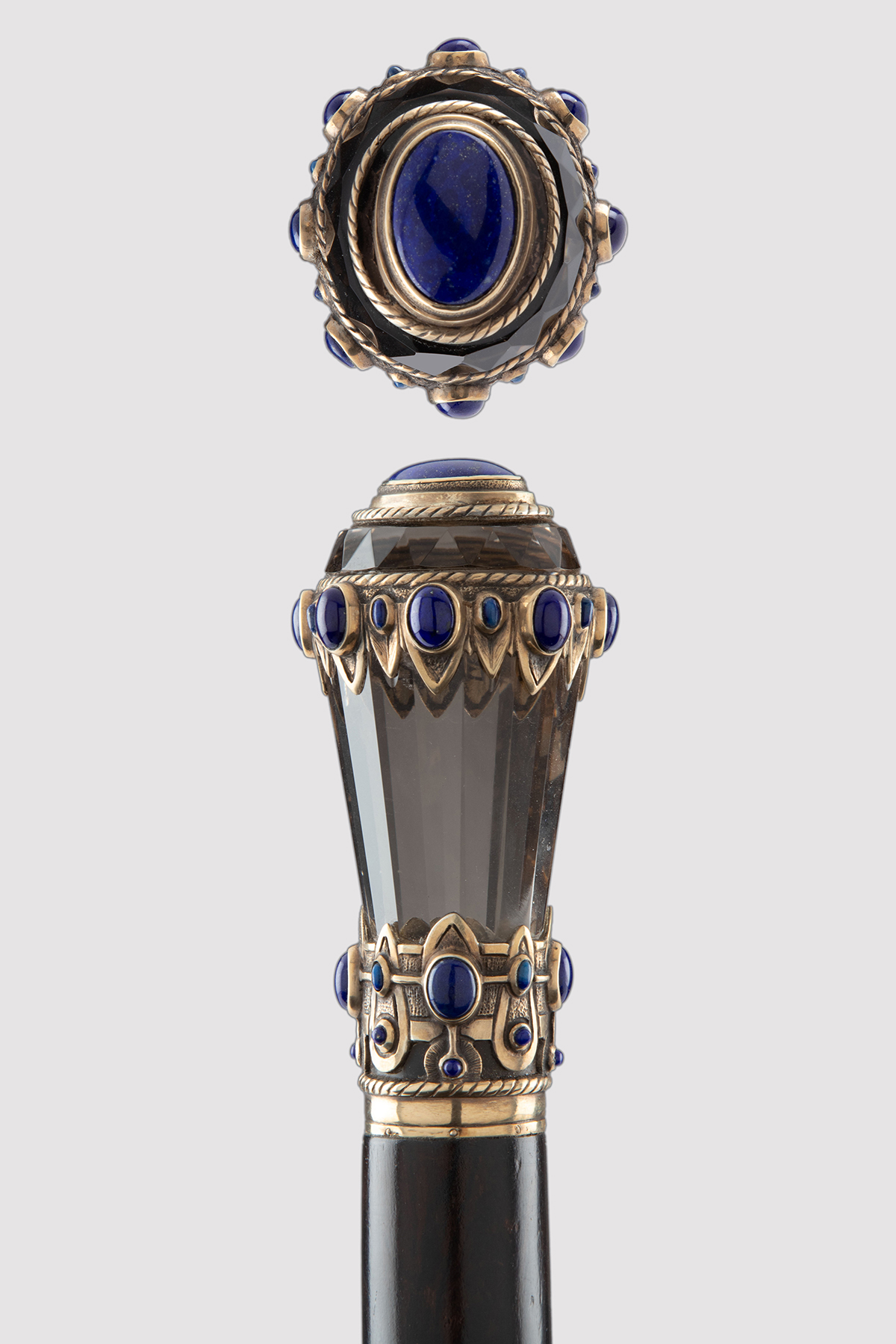
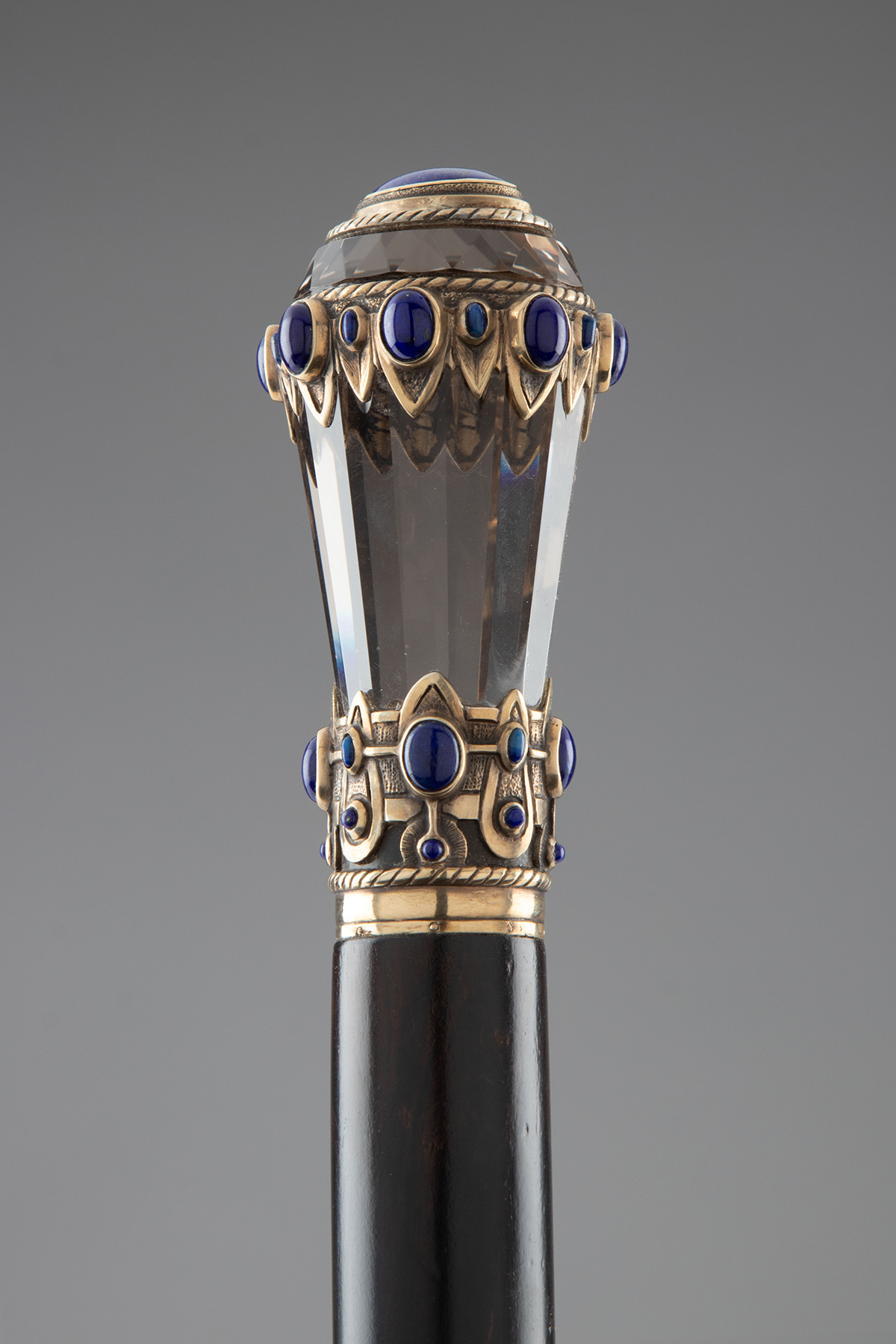
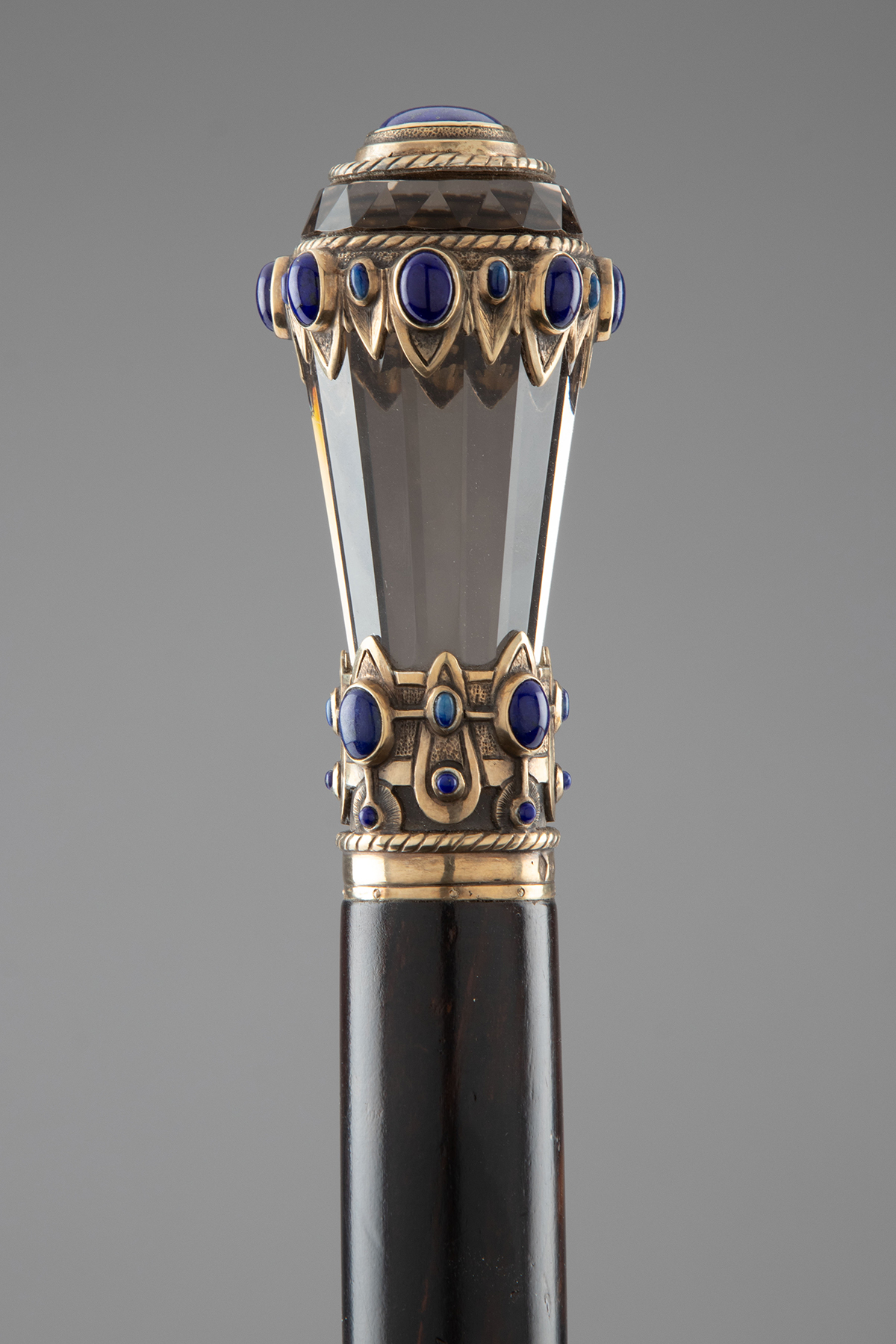
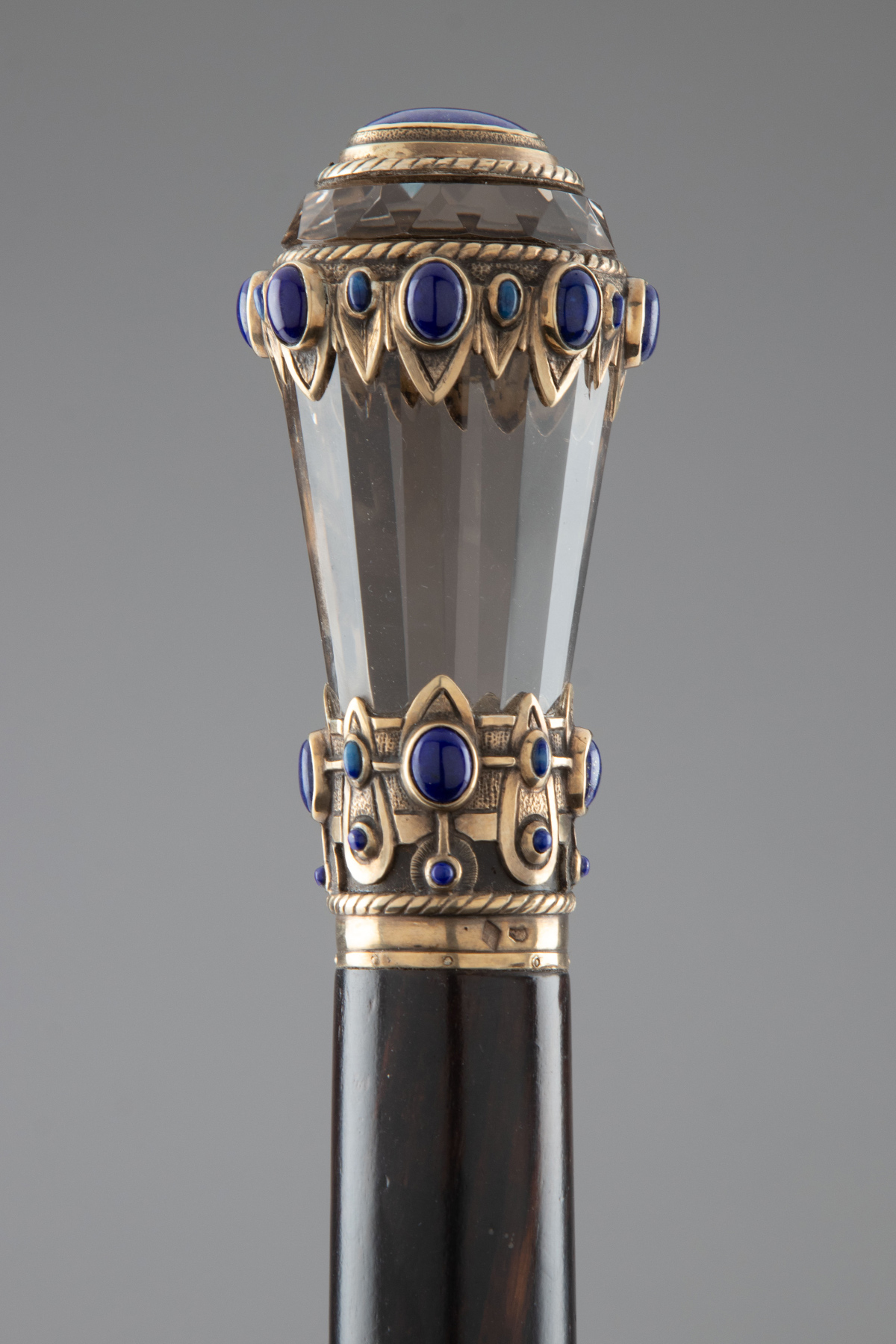
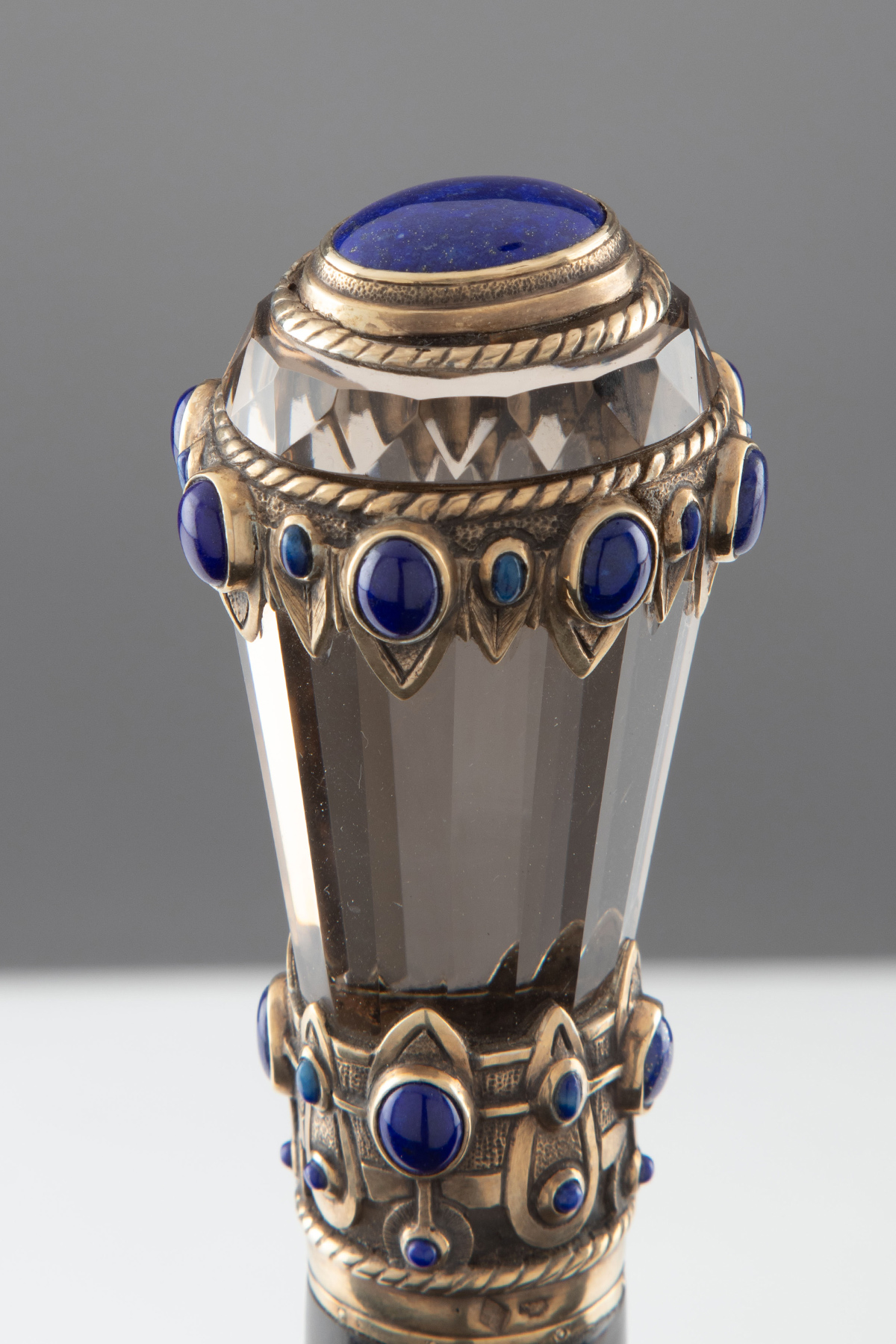
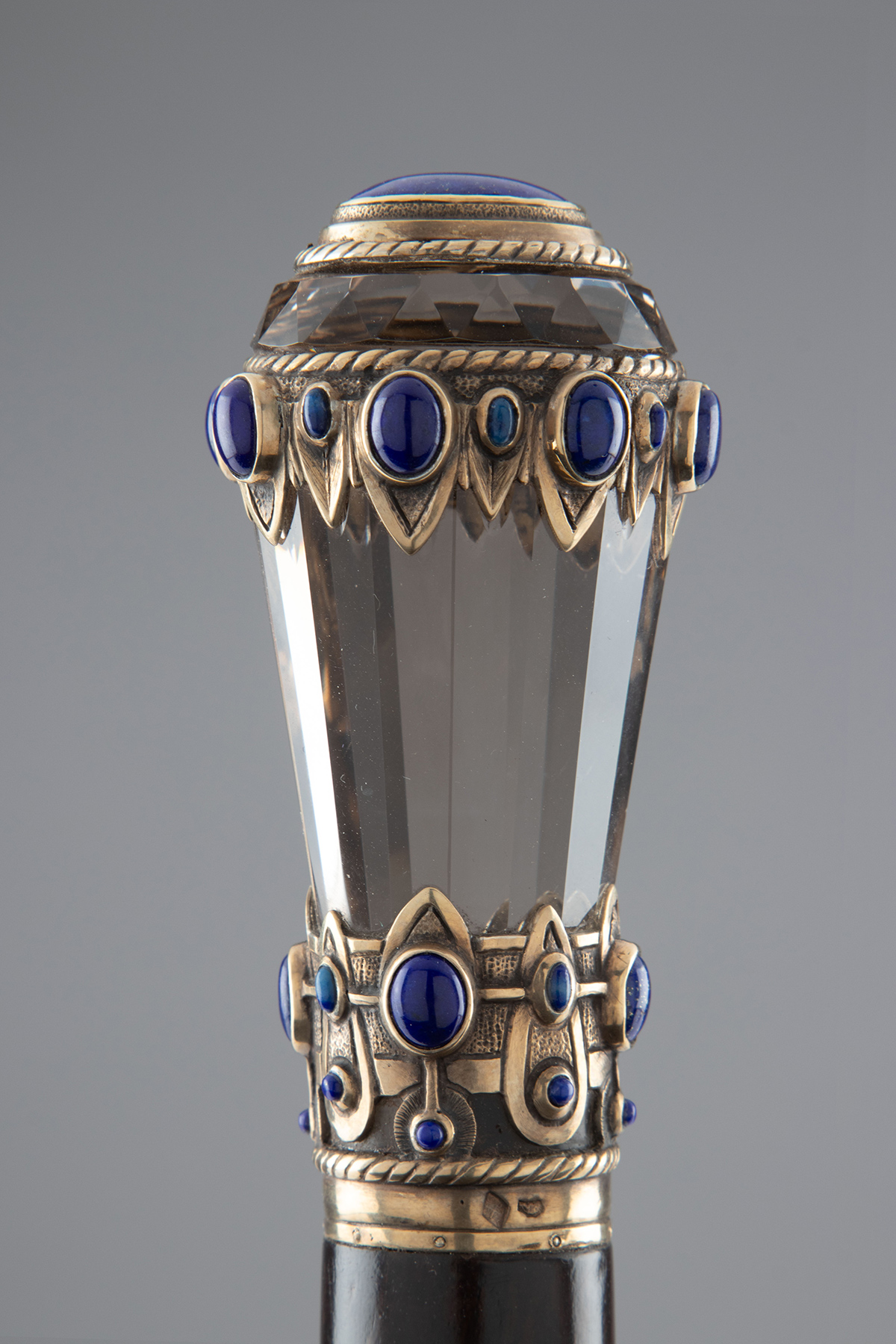
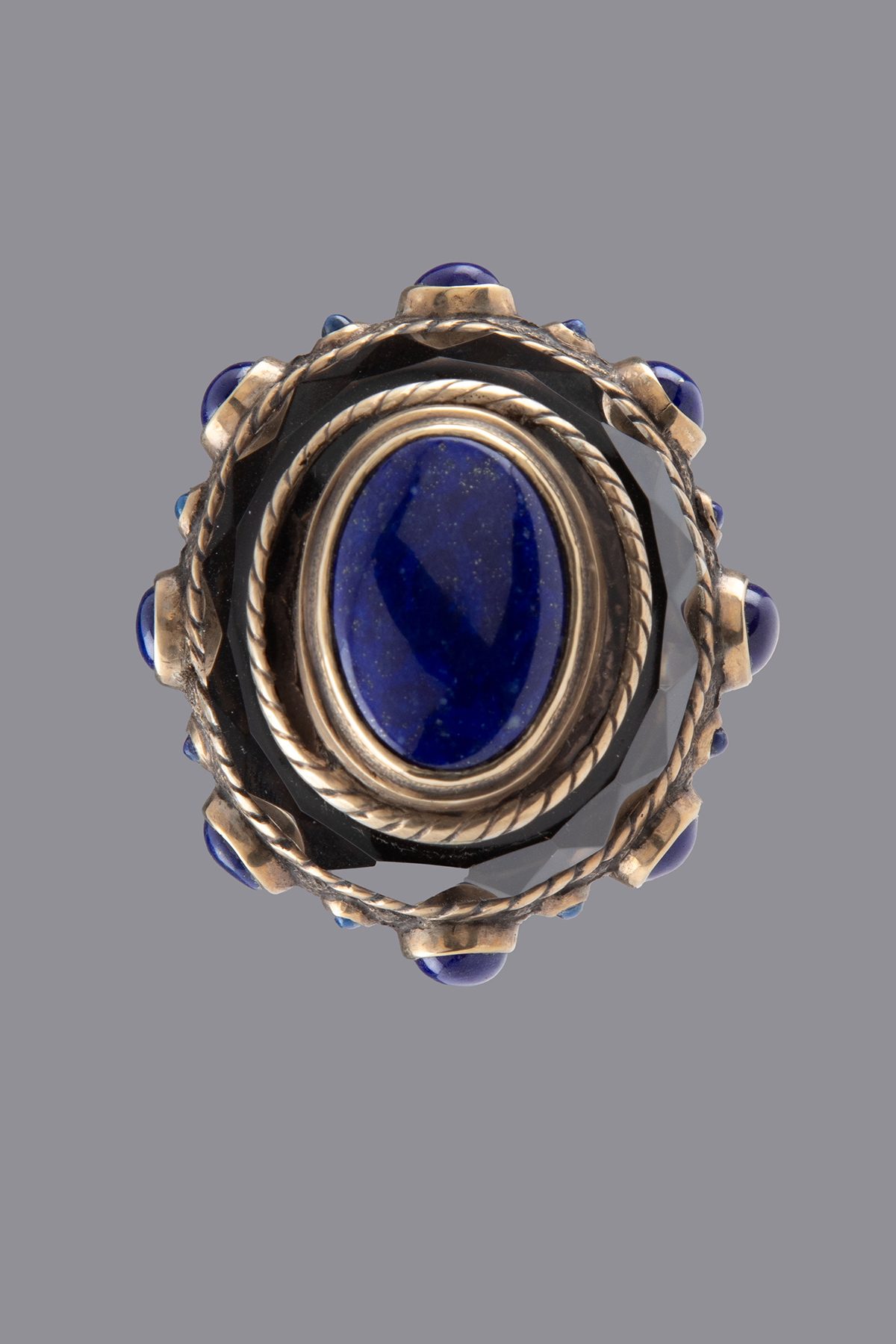
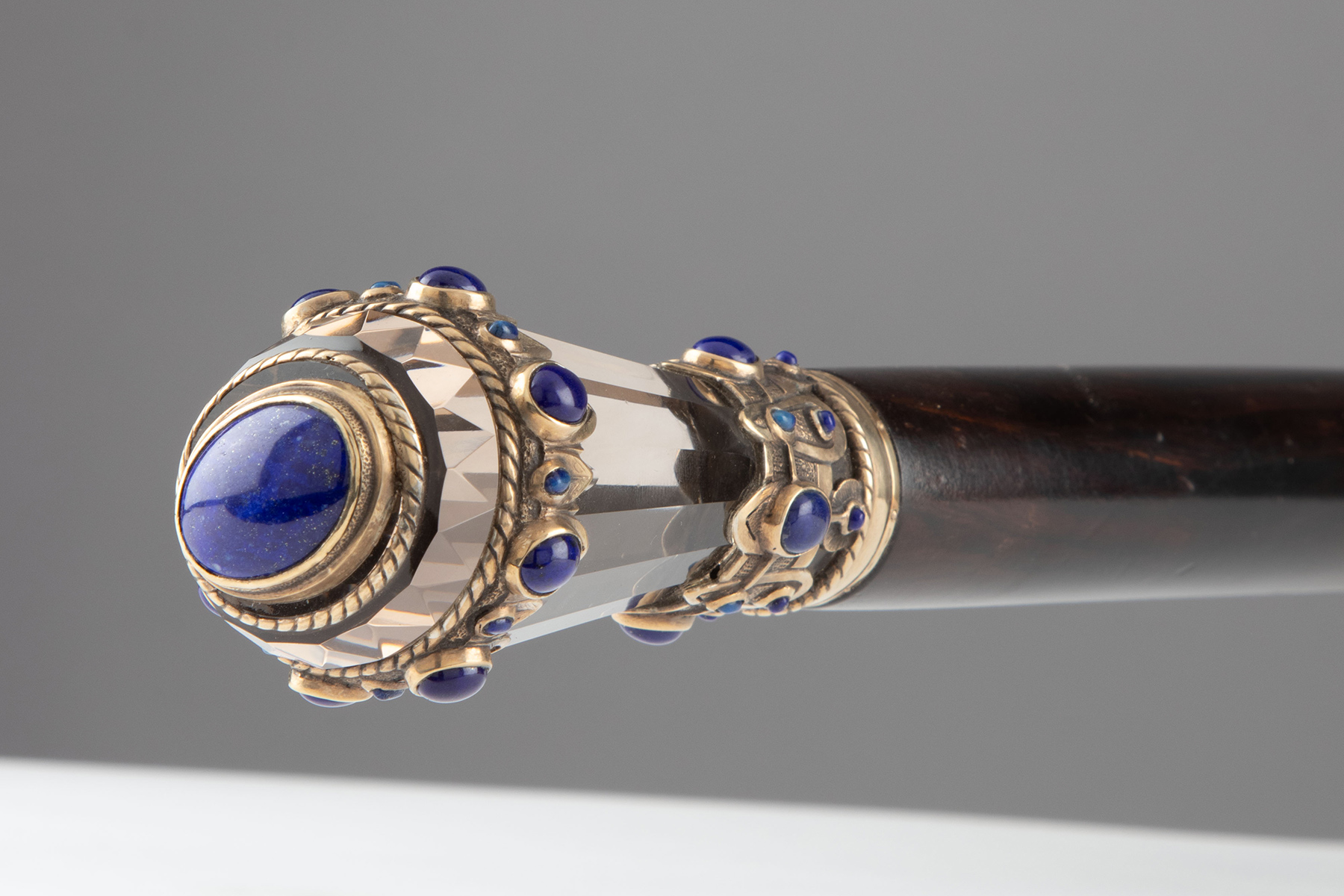
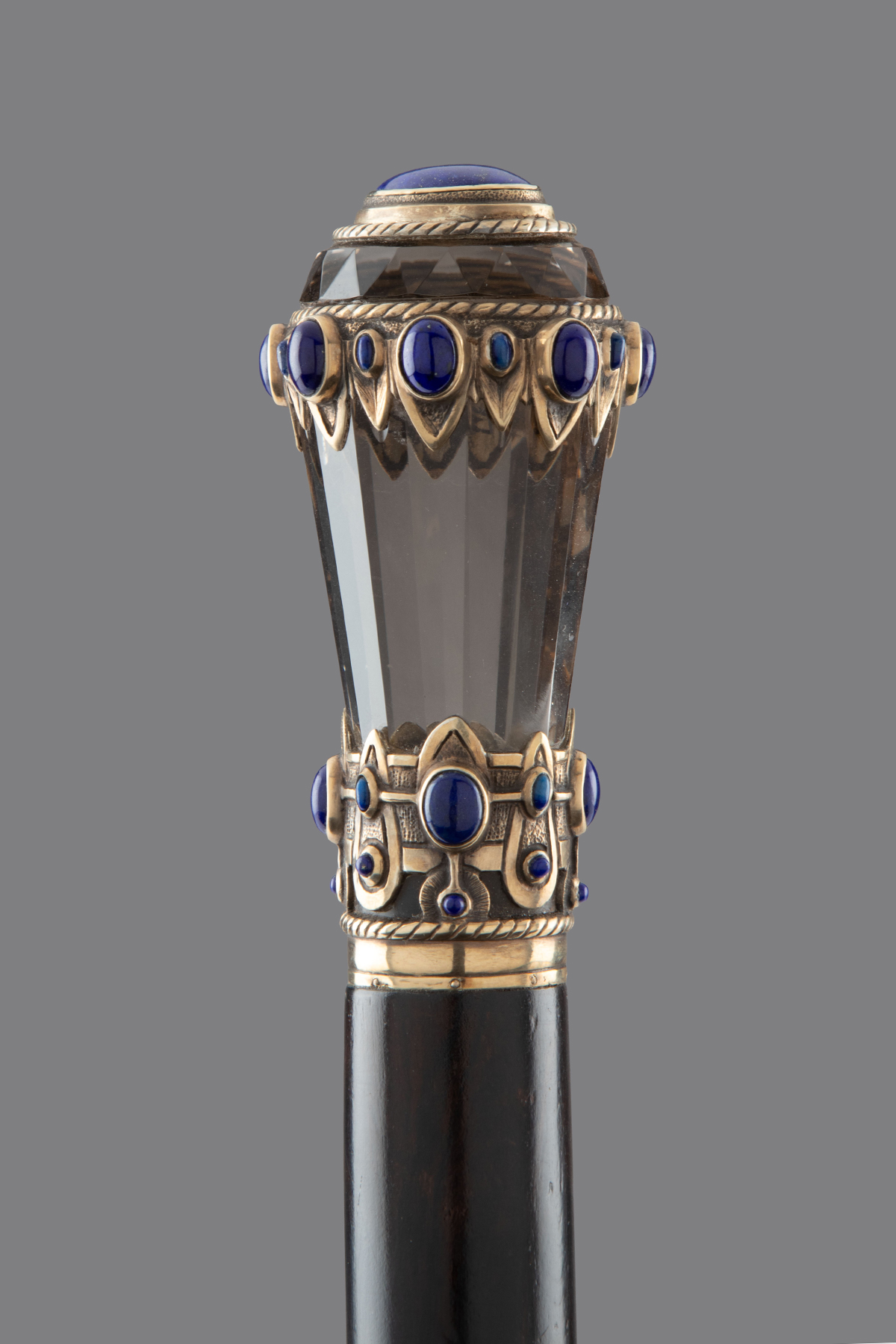
Georges Fouquet jeweled walking stick, smoky quartz and lapis lazuli. Paris, France, late 19th century.
France end of 19th century.
9000 EURO
A jeweled walking stick signed Georges Fouquet, Paris, late 19th century. The milord-shaped pommel is made of faceted smoky quartz, partially covered with three gilded silver elements: a band, a crown, and a cap set with various cabochon-cut lapis lazuli stones. The cane is made of ebony. Alphonse Fouquet, Georges’ father, founded the eponymous family business in 1860. It would last for two more generations. Georges (1862–1957), who took over the company in 1895, was renowned for his splendid Art Nouveau creations. Two decades later, in 1919, Georges’ son Lean joined the company, where he specialized in the new Art Deco style. Often grouped with René Lalique and Lucien Gaillard, Georges Fouquet was one of the leading designers and manufacturers of French Art Nouveau jewelry. In 1899, Georges began a three-year collaboration with Alphonse Mucha. They designed and created a spectacular series of jewels that anchored Fouquet’s exhibition at the 1900 Paris Exposition.
36” – 92 cm H 2” – 5 cm L 1,75” – 4,5 cm D
REF: M6207