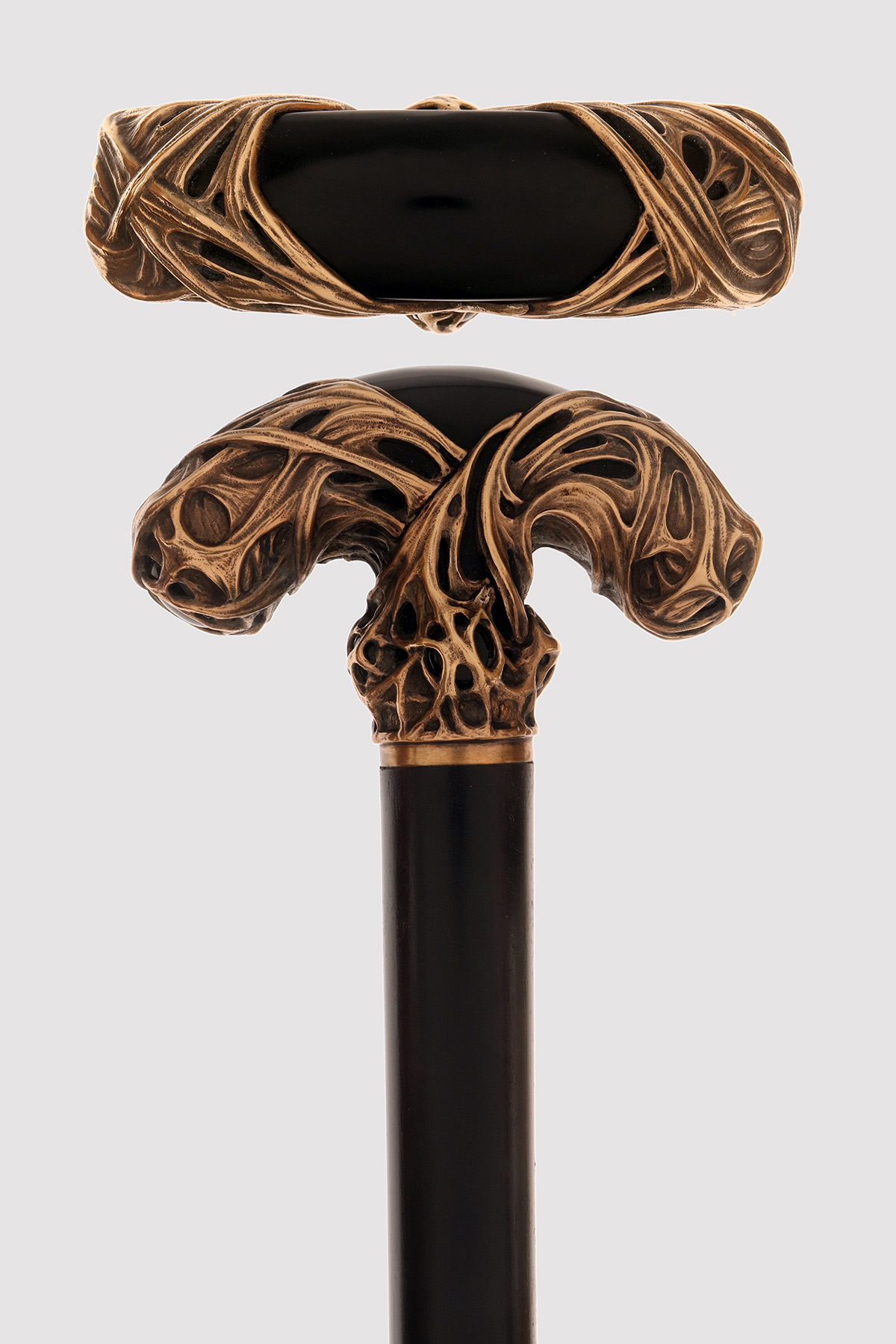
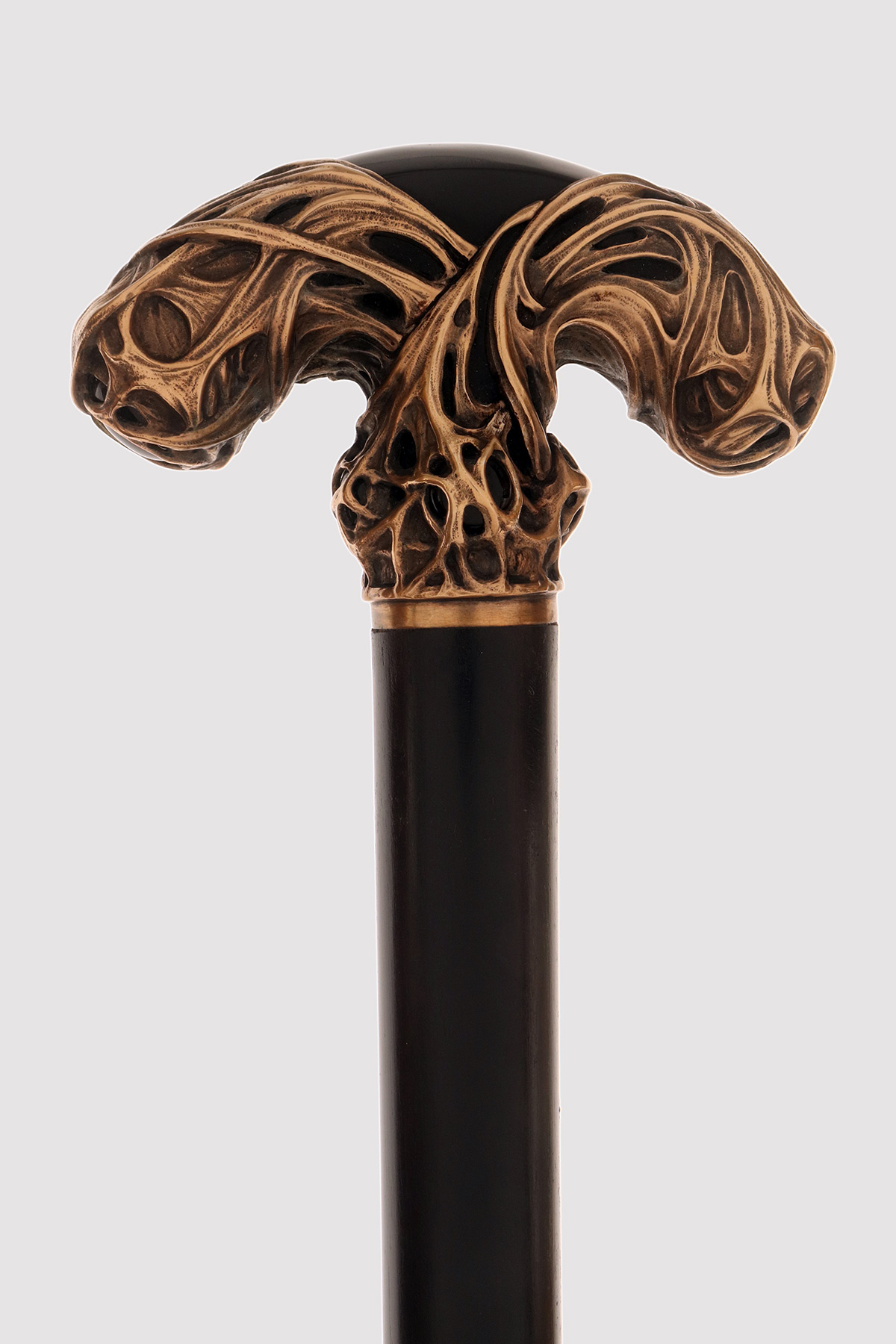
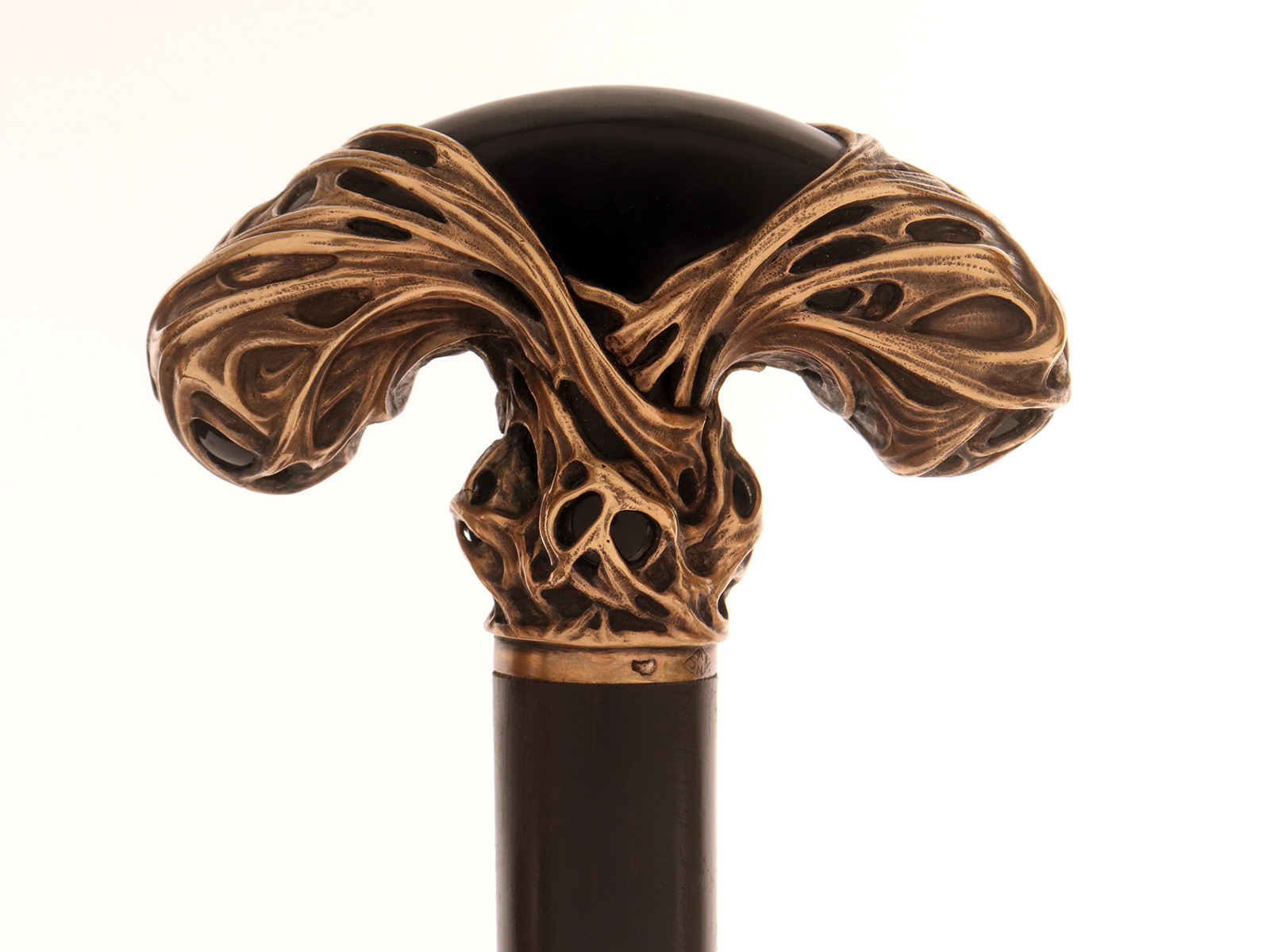
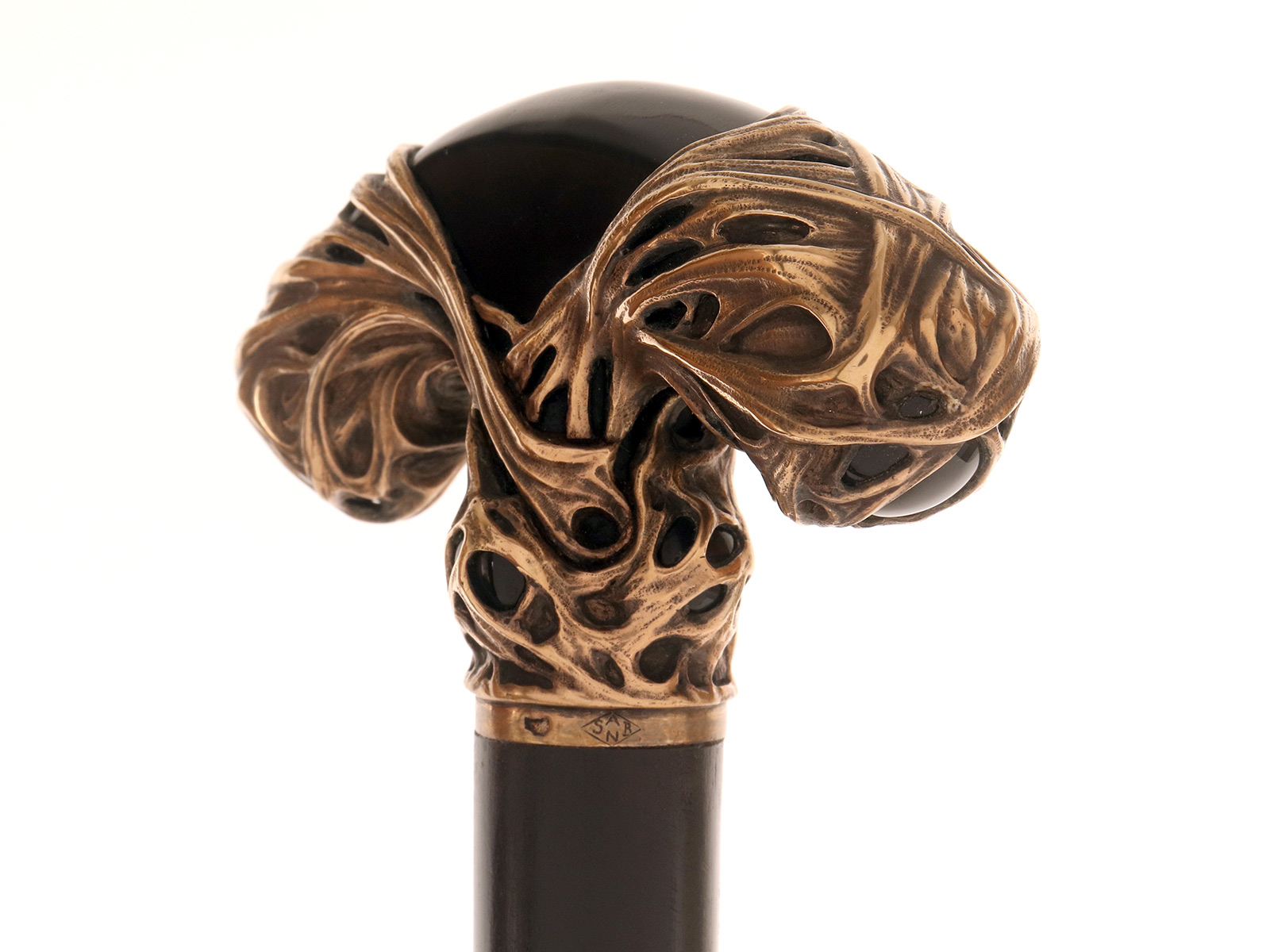
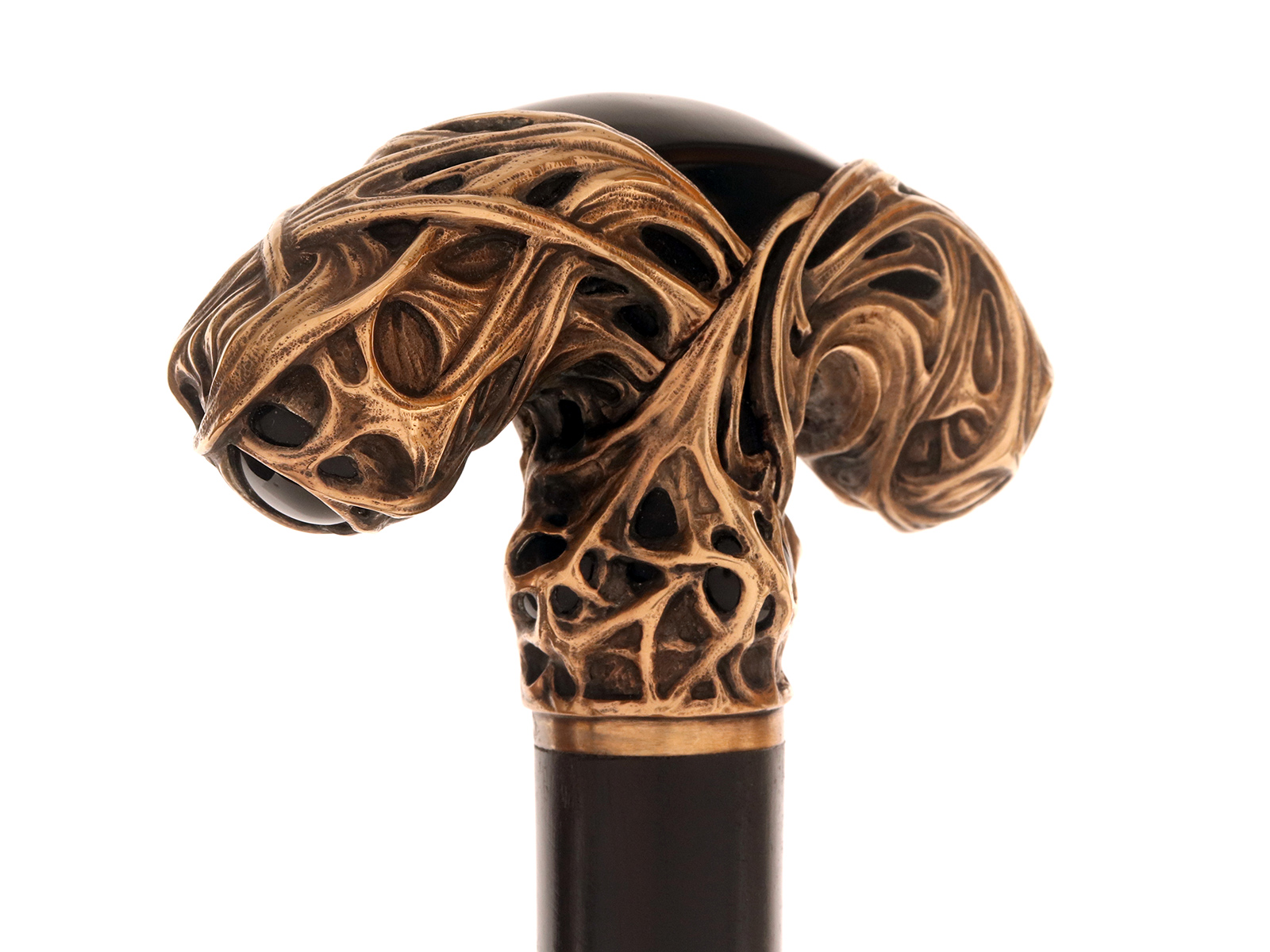
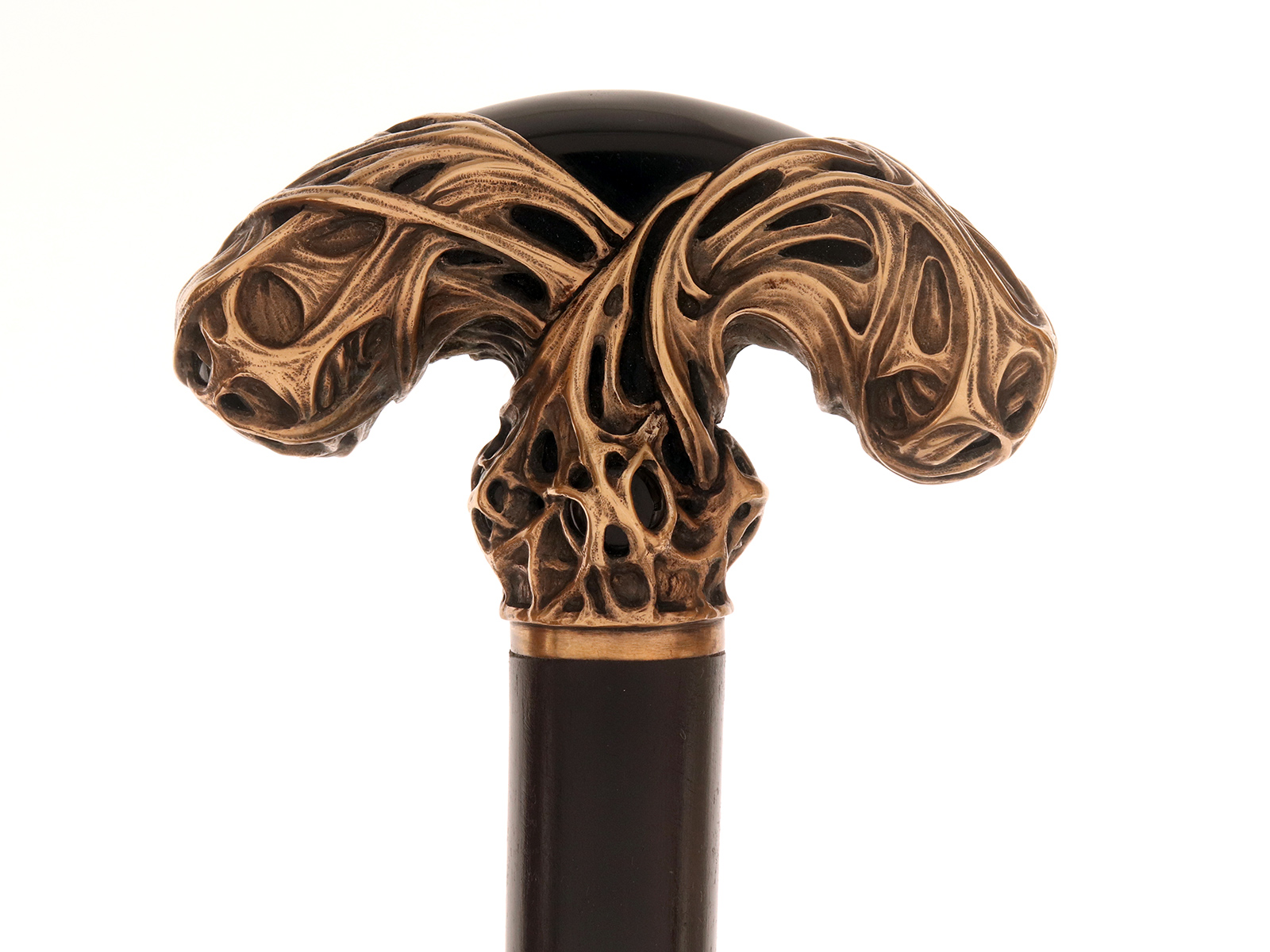
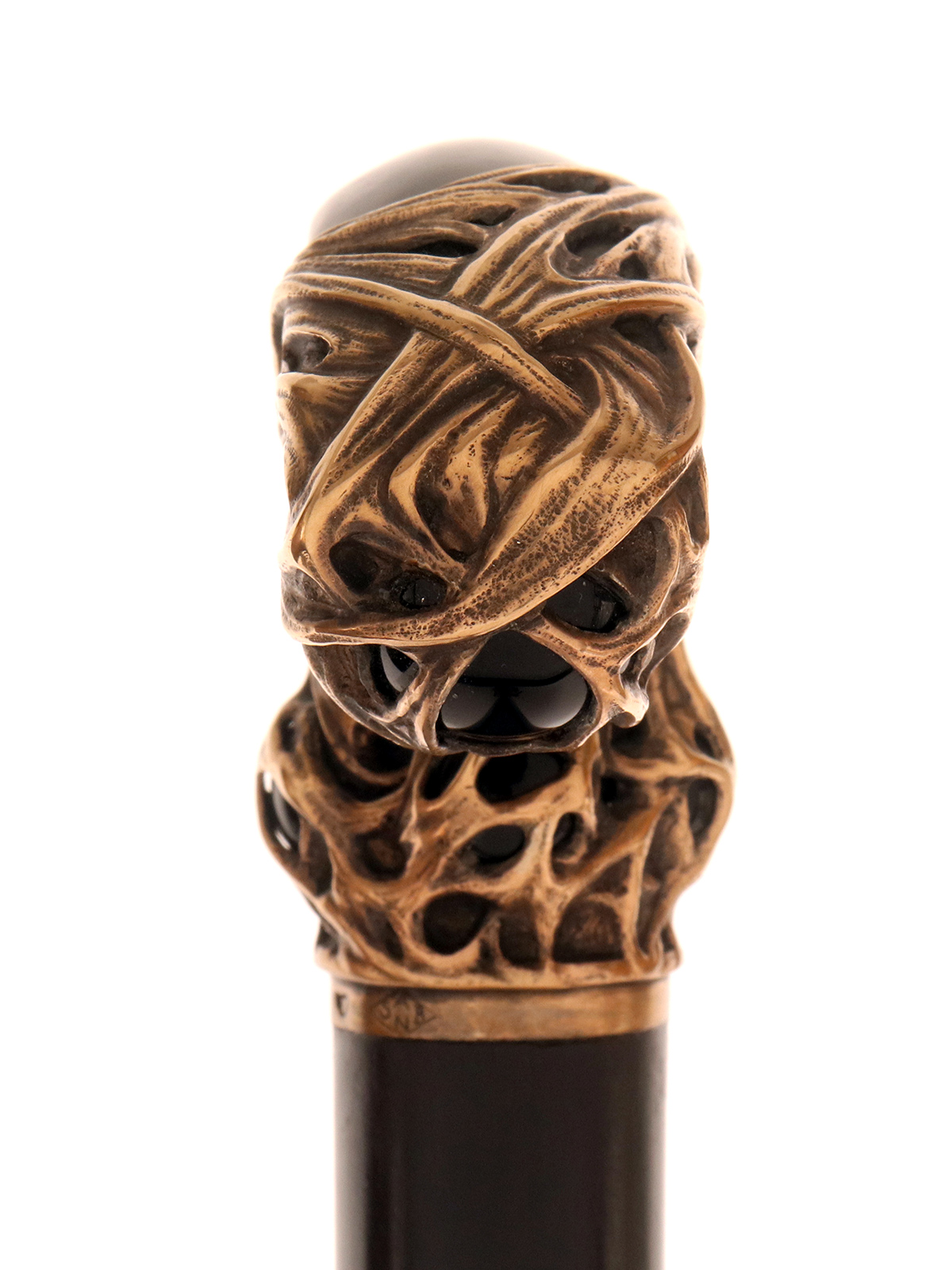
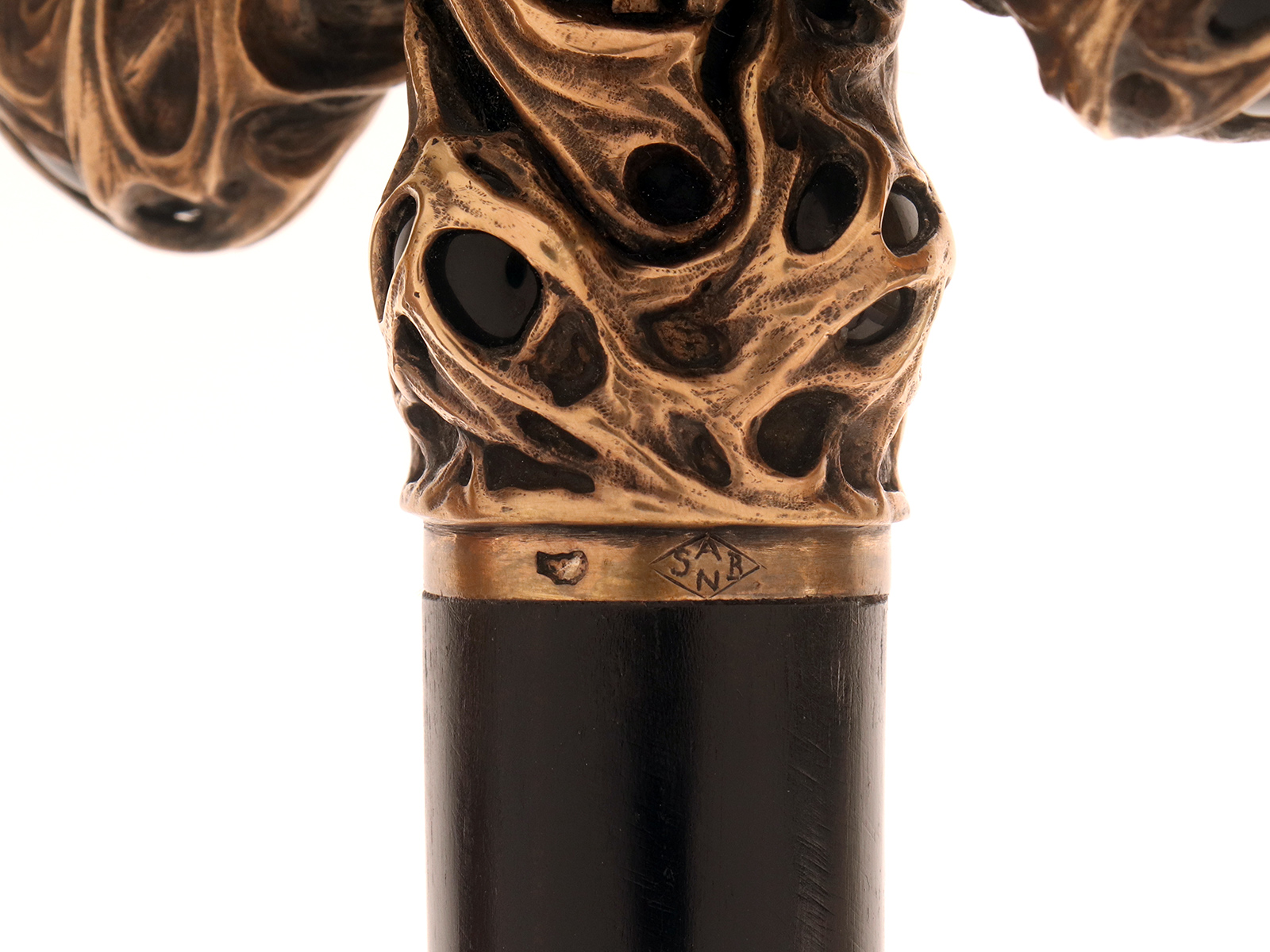
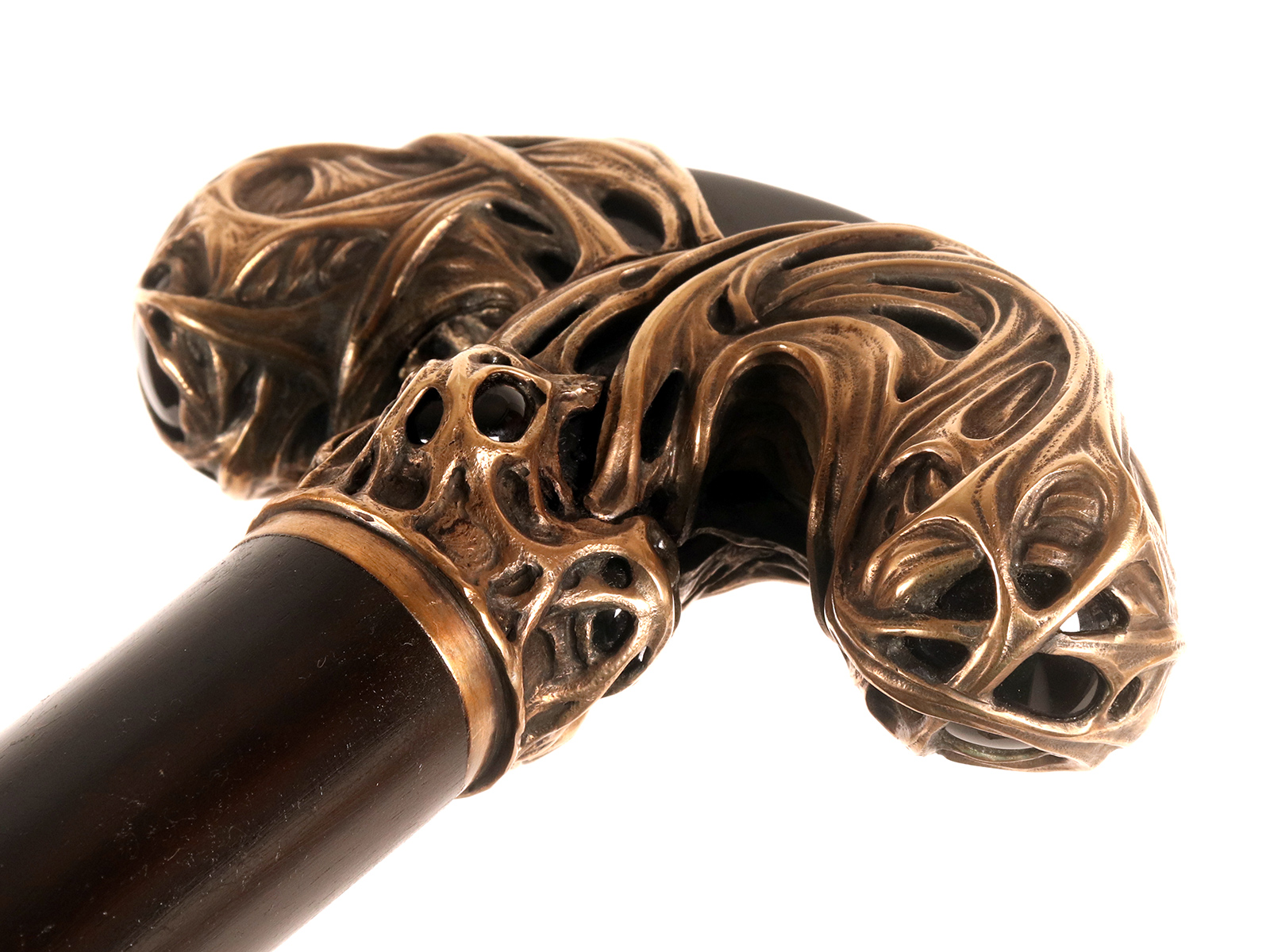
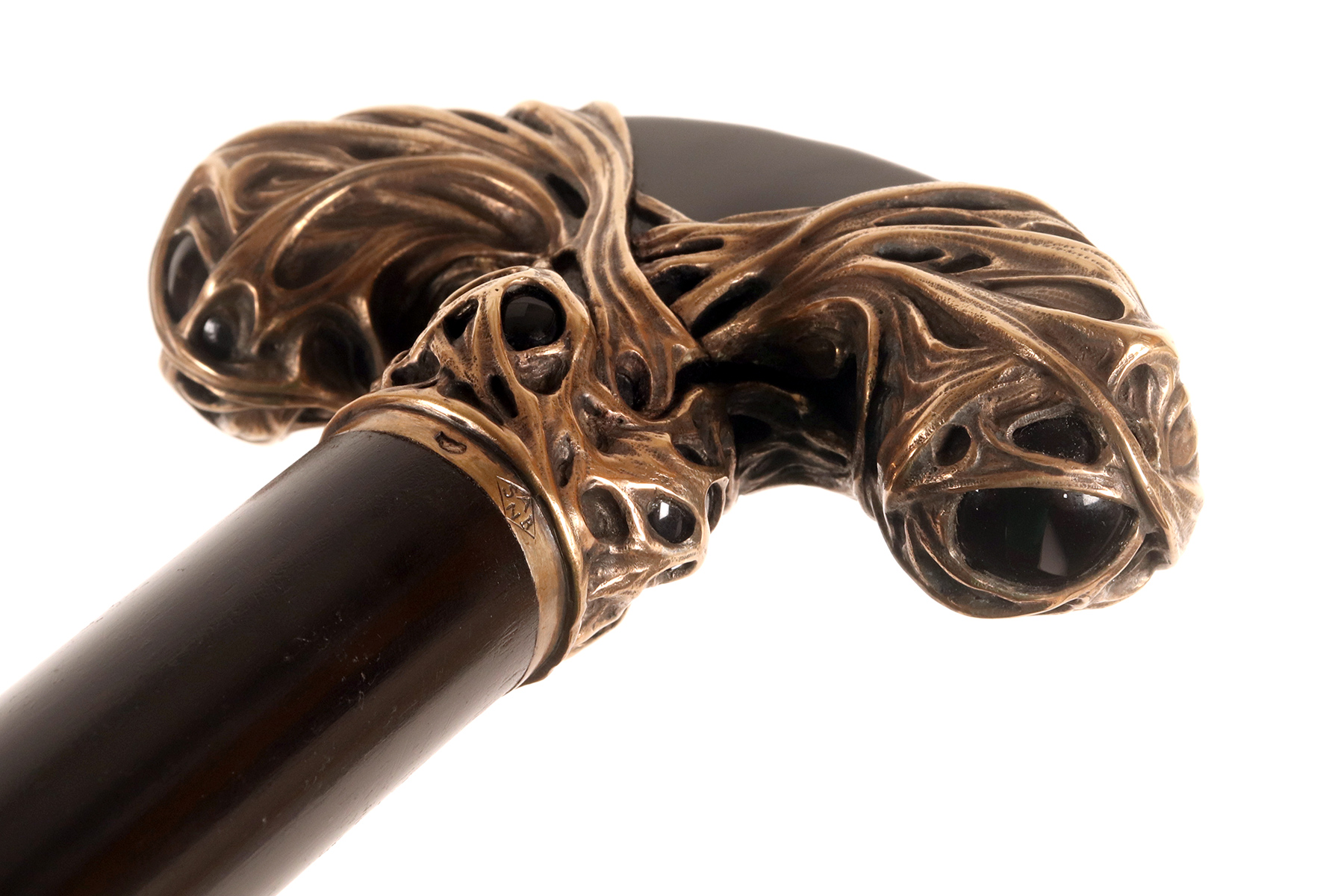
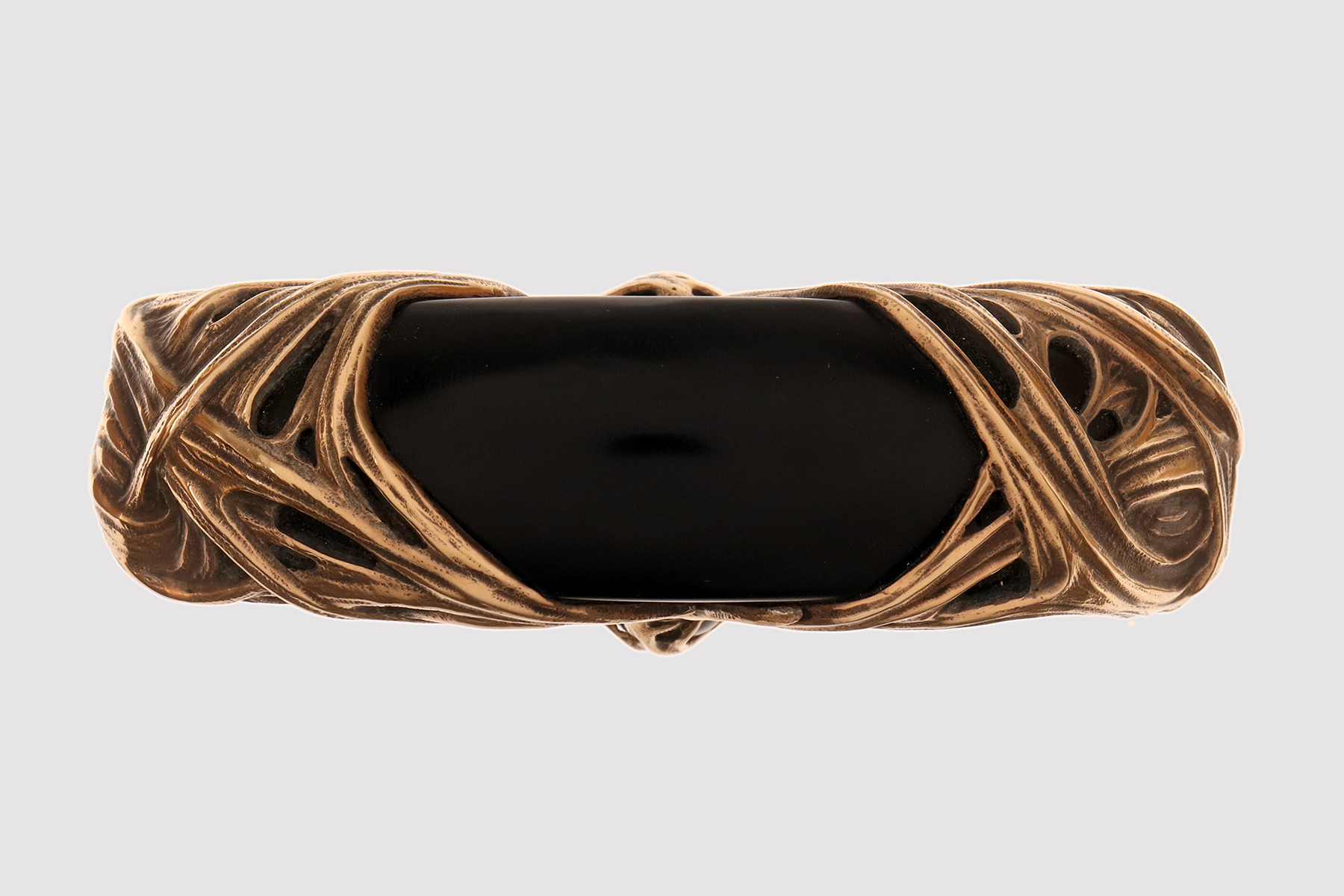
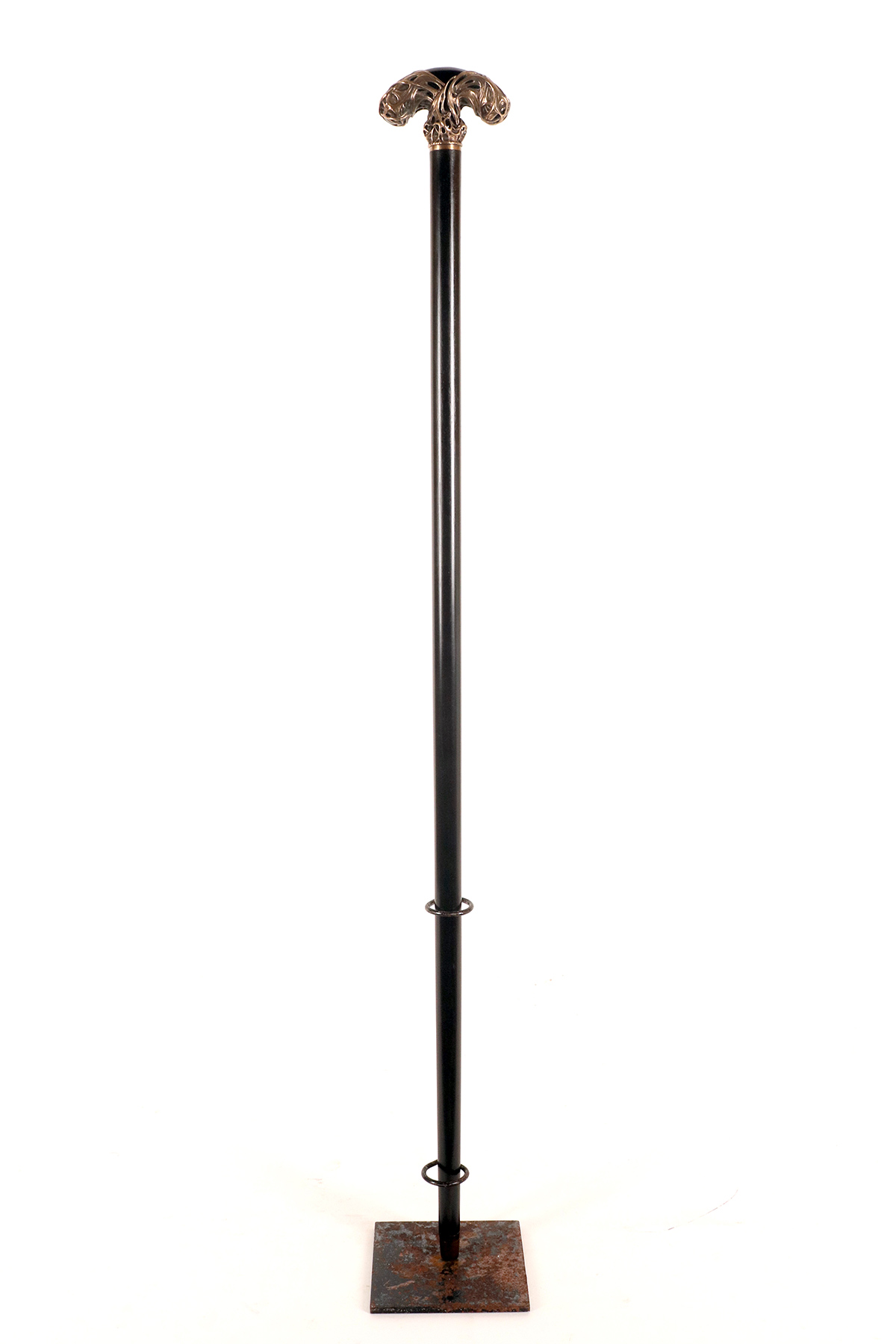
Art Nouveau walking stick in silver gilt and black onyx with ribbons, signed Siegfried Bing, Paris, France 1900-1905.
Paris, France circa 1900
7200 EURO
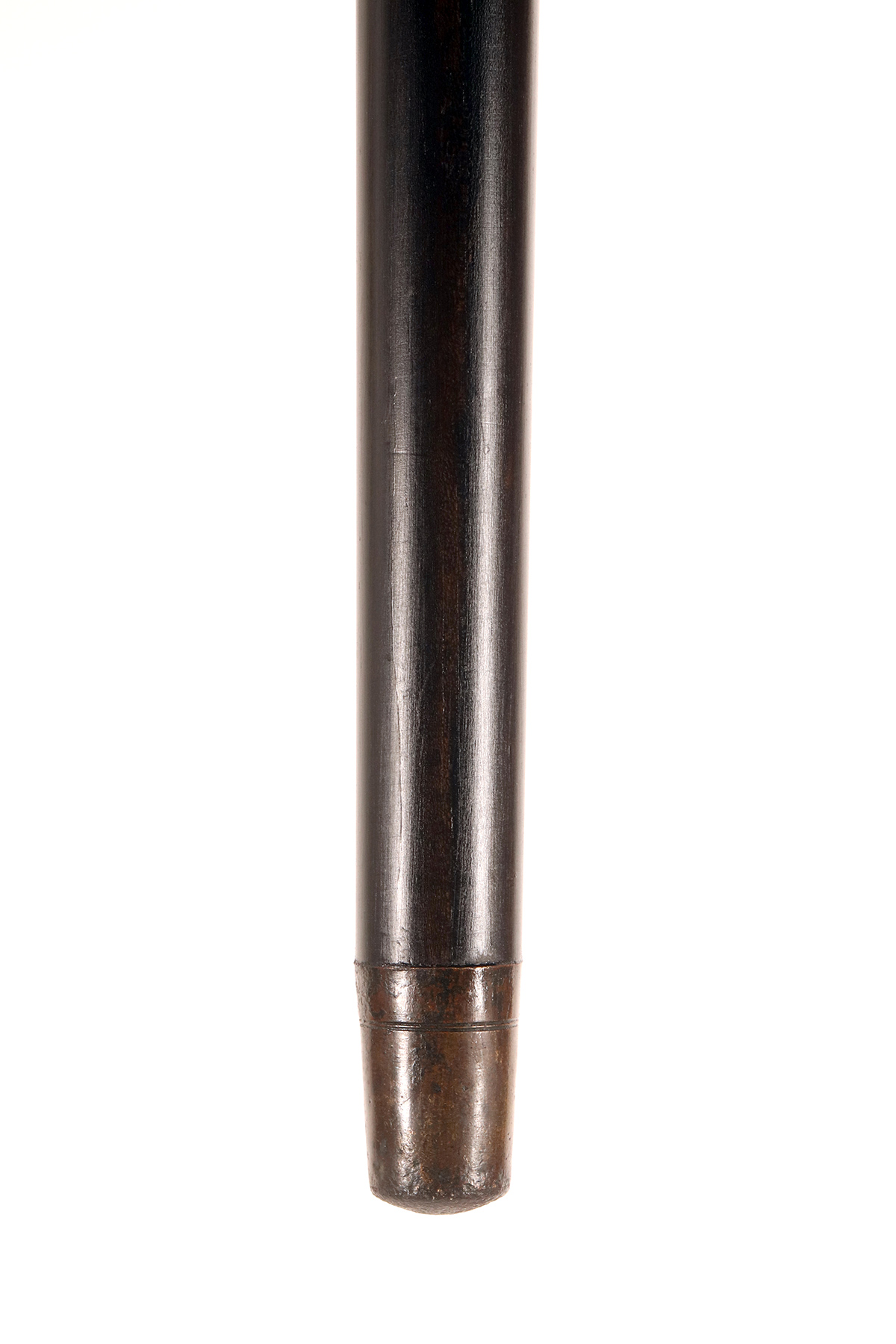
Art Nouveau walking stick in gilded silver with an elegantly curved T-shaped black onyx knob, wrapped in spiraling gilded silver ribbons. At the ends of the T and the base of the knob, the ribbons freely embrace the stone, with cabochon-cut onyx protrusions. The shaft is made of ebony wood and the tip is metal, brass and iron. This romantic walking stick bears the hallmarks of Siegfried Bing (1838-1905), considered a key figure in the spread of Art Nouveau. Born in Hamburg, Bing moved to Paris to help run the family business; at the age of 35, he took over management. After a trip to the Far East, Bing focused on Asian art objects, particularly Japanese works, as did many other European and American artists fascinated by Japonism, a fascination with the sober and elegant aesthetic of Japanese art, which influenced the Art Nouveau style that conquered the world. In late 1895, Bing opened a gallery at 22 Rue de Provence in Paris, calling it the Maison de l’Art Nouveau, thus christening an entire movement. Art Nouveau had already begun to spread throughout the artistic and intellectual world, but giving it a name gave Bing cultural immortality. The gallery’s furnishings were designed by Henry Clemens Van de Velde and featured Louis Confort Tiffany’s Favrille glass, introduced to America in 1892. Bing was the sole European supplier. His acclaimed pavilion at the 1900 Paris World’s Fair was filled with fabulous Art Nouveau creations. Paris, France 1900–1905.
3,5” – 89 CM H 3,5” – 9 CM L 1” – 3 CM D
REF: M6227